

Why Some Corporate Events Are Remembered Long After They End
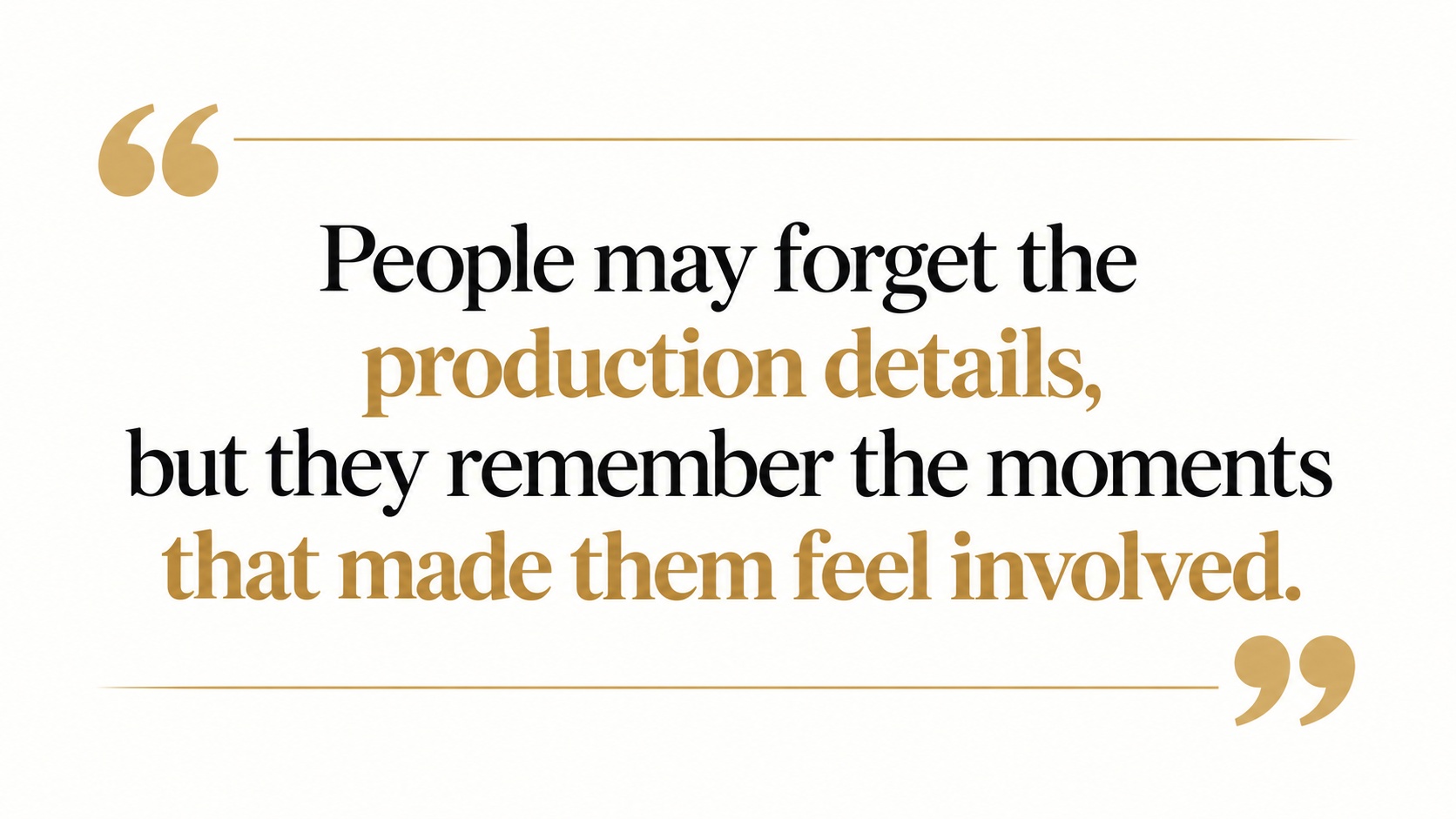
Think about the last corporate event you attended.
You might not remember the exact colour of the stage, the number of LED screens or the design of the registration desk. But you may remember a colleague walking up to receive an award, a powerful opening moment, an unexpected announcement or a conversation that changed the way you thought about something.
That difference is important.
Some events are attended. Others become experiences that people continue talking about long after they leave the venue.
The distinction is rarely explained by the size of the budget alone. An elaborate stage cannot automatically create an emotional connection, and a packed auditorium does not necessarily mean the audience felt involved. What matters is how the individual elements work together to give people something meaningful to notice, experience and remember.
For businesses, this presents an interesting opportunity. A corporate event can be more than a scheduled gathering or a programme of presentations. It can become a moment that reinforces company culture, strengthens relationships, celebrates achievements or gives a brand a more tangible identity.
So, what makes some corporate events memorable while others quickly fade from memory?
The answer begins with understanding the experience from the attendee's point of view.
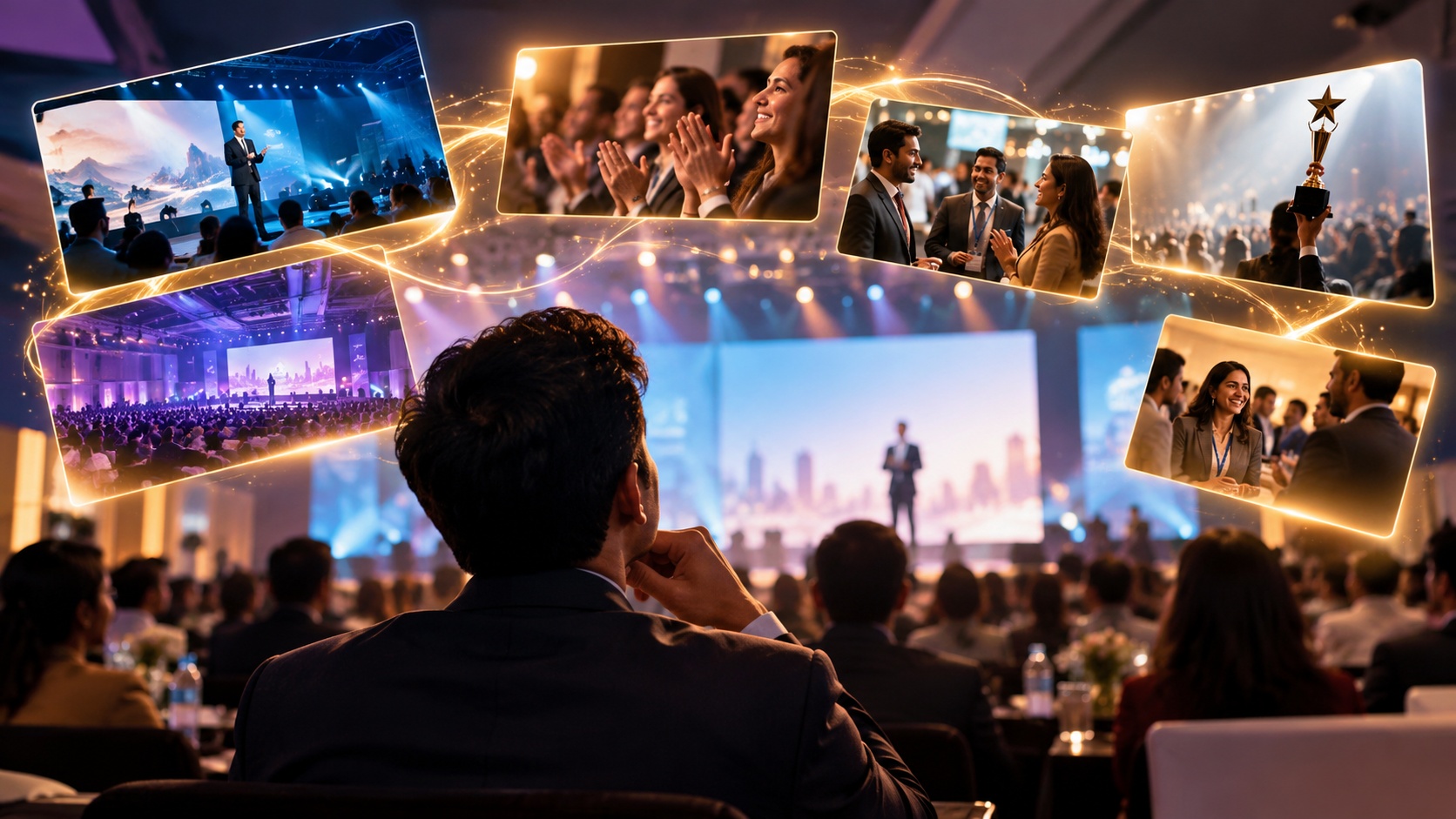
1. People Remember Moments, Not Just Programmes
An event programme tells people what is scheduled to happen. An experience determines how those moments are received.
Consider two employee recognition ceremonies. Both feature award presentations, speeches, a stage and an audience. In the first, names are announced one after another, photographs are taken and the programme moves forward. In the second, each recognition moment connects the achievement to the person's contribution, the team's progress or a meaningful organisational milestone.
The format may be similar, but the experience can feel very different.
The reason is that people do not process an event as a checklist of production elements. They experience it through individual moments: what catches their attention, what makes sense to them, how they participate and what feels personally relevant.
This does not mean every event needs a dramatic reveal or an emotional speech. A useful conference can be memorable because it makes a difficult subject clearer. A dealer meet can stand out because it creates valuable conversations. A team celebration can matter because people feel genuinely recognised.
The first step is to stop asking only, “What will happen at this event?” and start asking, “What should people take away from it?”
2. Give the Event a Story, Not Just a Schedule
A well-structured event has a beginning, a middle and an end. A memorable event also gives those stages a sense of purpose.
Storytelling does not require a theatrical production or a complicated theme. It means connecting the programme's elements so that the audience understands why they belong together.
For example, a leadership conference might begin by establishing the challenges facing the business, move into the organisation's strategic priorities and conclude with the actions teams need to take. An annual awards ceremony might begin by reflecting on the year's journey, recognise individual and team contributions, and finish by looking ahead to shared ambitions.
In both cases, the programme becomes easier to follow because each part supports a larger message.
The event environment can reinforce that narrative. Stage visuals, presentation design, lighting, transitions and the placement of key moments can help distinguish one section from another while maintaining a consistent identity.
The important point is alignment. If the event is intended to celebrate people, the experience should make recognition feel central rather than treating it as a short segment between unrelated activities. If the objective is to communicate a strategy, the production should help people focus on the message instead of competing with it.
A strong event story gives every major element a reason to be there.
3. The First Impression Sets the Context
The attendee experience begins before the opening speech.
People form initial impressions as they approach the venue, enter the space, navigate registration and encounter the event's visual identity. These moments help establish what kind of experience they are entering and what deserves their attention.
A confusing entry route can create unnecessary friction. Poorly positioned signage can make a large venue difficult to navigate. A stage that is impressive from one angle but difficult to see from the audience can weaken the experience once the programme begins.
By contrast, clear wayfinding, a welcoming arrival area, consistent branding and a thoughtfully arranged venue help people settle in and focus on the purpose of the gathering.
This is where design becomes more than decoration. Spatial layout, lighting, signage and visual hierarchy influence how people move through an environment and what they notice first.
The goal is not to make every surface elaborate. It is to ensure that the environment communicates the right message and supports the attendee journey.
For a business conference, that might mean clarity and professionalism. For an employee celebration, it could mean warmth and a stronger sense of occasion. The appropriate design depends on the audience and the objective.
4. Emotional Connection Makes Recognition More Meaningful
Recognition events offer a particularly clear example of how experience influences memory.
An award has a physical form, but its meaning comes from what it represents: effort, progress, contribution, perseverance or achievement. The event can help communicate that meaning—or unintentionally reduce the moment to a quick stage appearance.
Thoughtful recognition starts with context. Why is the person or team being recognised? What did their work make possible? Why should the audience understand the significance of the achievement?
When these details are communicated clearly, the moment becomes easier to connect with. The award recipient is acknowledged, and the audience gains a better understanding of the values the organisation wants to celebrate.
Production can support this without overwhelming the message. Appropriate stage lighting, clear visuals, a well-paced announcement and a smooth transition onto and off the stage help the moment receive the attention it deserves.
The same principle applies beyond awards. A company milestone, a product achievement or a team's contribution to a difficult project can be made more meaningful when the event explains the story behind it.
The aim is not to manufacture emotion. It is to create the conditions for genuine appreciation.
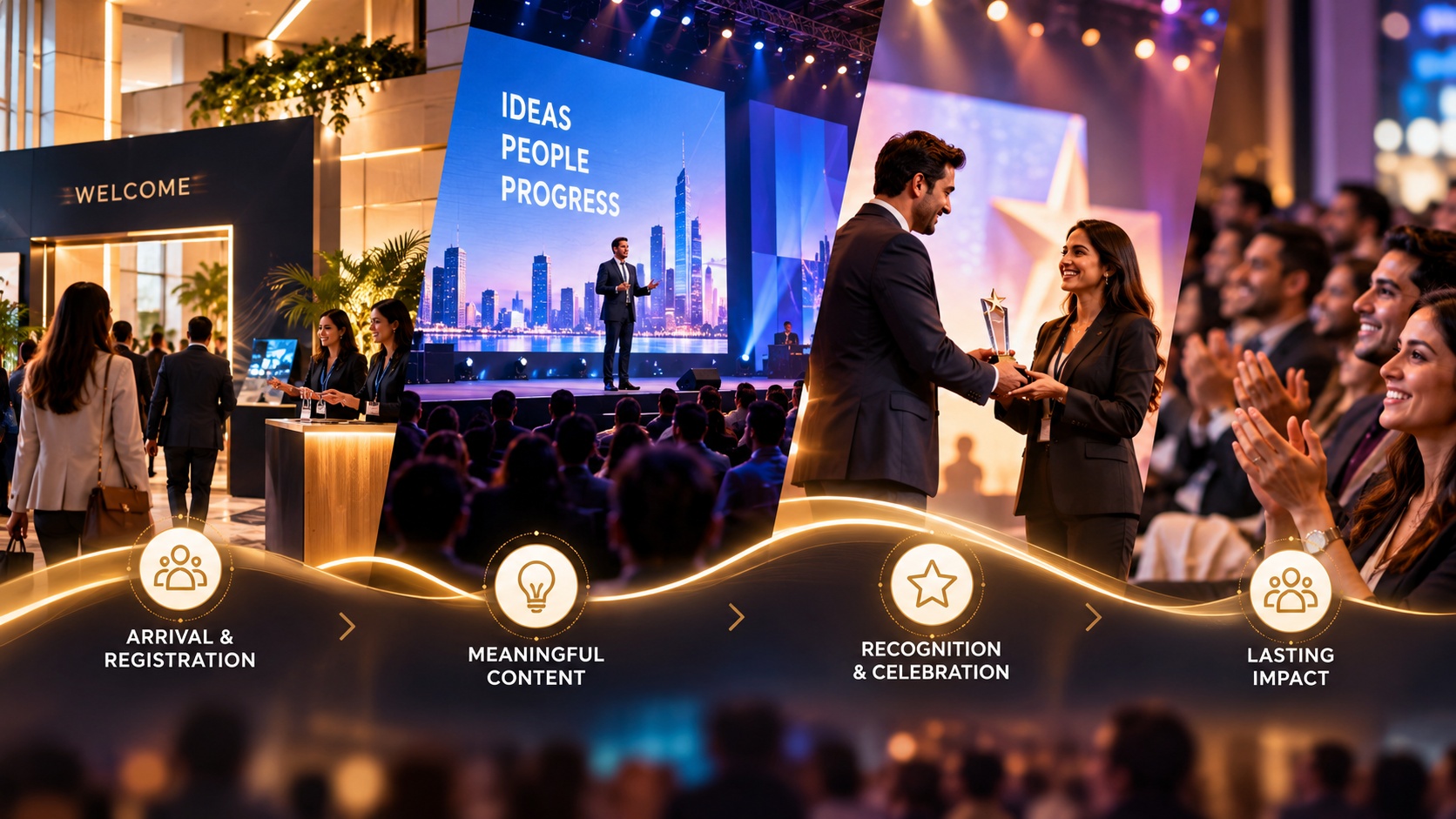
5. Participation Turns Attendees into Contributors
An audience can be present without being actively involved.
If every moment requires people to sit quietly and receive information, the experience may become difficult to sustain—particularly during long programmes with multiple speakers or similar presentation formats.
Participation introduces a different relationship between the event and its attendees.
Depending on the purpose of the gathering, it might involve a meaningful question-and-answer session, a facilitated discussion, a product demonstration, a collaborative activity or a structured networking opportunity. Even a short moment for people to reflect on a question and discuss it with someone nearby can make a session feel more relevant.
The choice should be deliberate. An interactive feature is not automatically valuable just because it gets people moving or using their phones. It should support the purpose of the event and suit the audience.
For example, a leadership workshop may benefit from small-group discussion, while a formal awards ceremony may be better served by carefully paced recognition moments and opportunities for the audience to celebrate together.
Production plays an important supporting role. Microphone access, screen visibility, room layout, timing and transitions all influence whether participation feels natural or awkward.
The best interaction is not necessarily the most elaborate. It is the one that helps attendees contribute meaningfully.
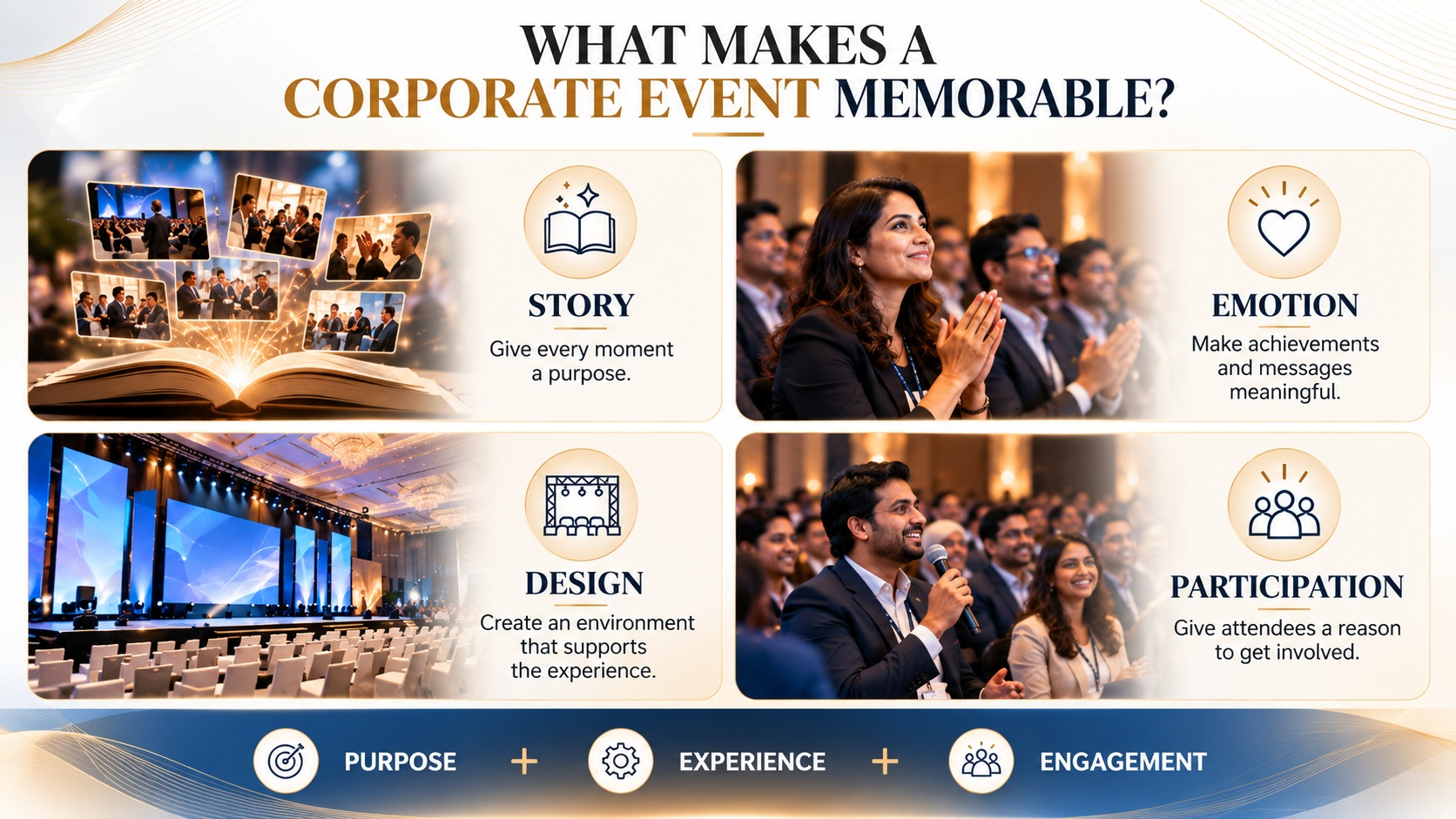
6. Sensory Details: When the Environment Supports the Message
People experience an event through more than what appears on a screen.
Lighting affects visibility and atmosphere. Sound influences whether a speaker can be followed comfortably. Spatial layout affects movement and interaction. Visual consistency helps people understand the event's identity and distinguish key moments from routine transitions.
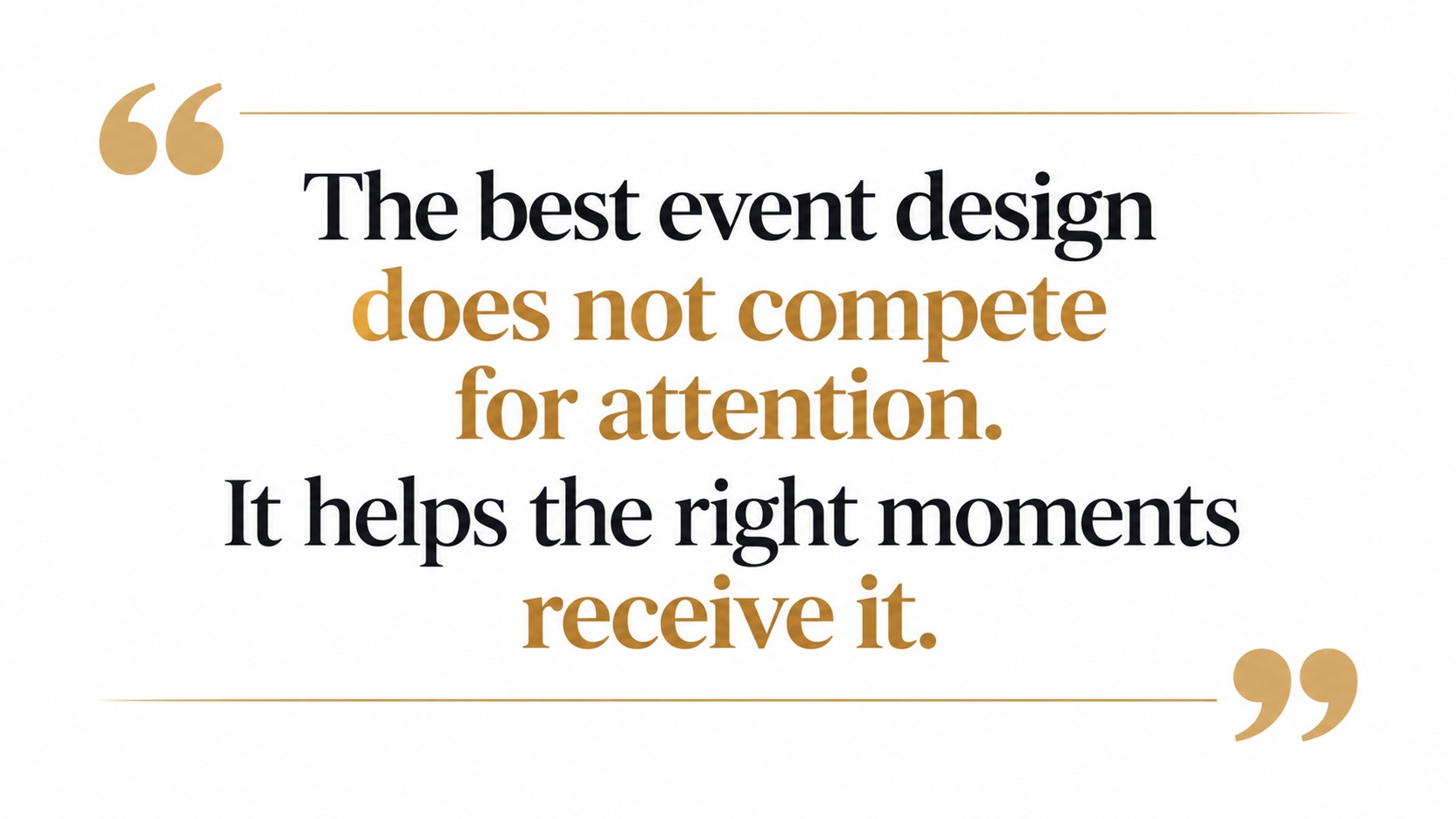
These elements do not need to compete for attention. In many cases, the strongest design decisions are the ones that quietly make the experience easier to follow.
Consider a conference presentation. The right screen configuration makes content legible from different seating positions. Balanced lighting keeps the speaker visible while allowing attendees to see the visuals. Clear audio helps the audience follow the message without unnecessary effort.
Now consider an employee celebration. Lighting, stage visuals and the layout of the space can make award presentations feel distinct from the rest of the programme. The same technical tools serve a different purpose because the intended experience is different.
This is why event production decisions should be made in context. Adding more screens, stronger lighting or elaborate structures does not automatically improve an event. Each element should contribute to the overall experience rather than simply increase visual complexity.
7. Pacing Matters More Than Packing the Agenda
A full agenda may look productive on paper, but an event can become tiring if there is little variation in pace.
Long presentations, repeated announcements and rushed transitions can make it difficult for people to stay attentive. On the other hand, an event with a clear rhythm gives attendees time to absorb information, respond to key moments and move comfortably between activities.
Pacing starts with the programme structure. Important announcements may need room to land. Recognition segments may require time for recipients to reach the stage and for the audience to respond. Networking sessions need enough space for conversations to begin rather than ending just as people connect.
Transitions matter too. A well-planned handover between speakers, a clear change in the screen content or a deliberate pause can make the programme feel more coherent.
There is no single ideal duration for every session. A technical conference, an awards ceremony and an employee celebration have different demands. The appropriate pace depends on the audience, the content and the event's objective.
The key is to design the programme around how people will experience it—not merely how many items can fit into the schedule.
8. Consistency Helps the Experience Feel Connected
Memorable experiences are not built from isolated moments alone. The moments also need to feel like parts of the same event.
Imagine a corporate conference where the stage, presentation slides, signage and registration area all communicate different visual styles. Even if each component looks attractive individually, the overall experience may feel disconnected.
Visual consistency helps establish a recognisable identity. This can include the use of colours, typography, branded elements, screen layouts and signage. Consistency also applies to the programme's tone and messaging.
For example, a business event designed around innovation should communicate that idea through its content, visual language and audience experience—not simply through a futuristic stage backdrop.
This does not mean every element should look identical. Different sections can have their own character while remaining part of the same visual and narrative system.
Good coordination between design, fabrication, technical production and programme planning helps maintain that connection from arrival through the final session.
The result is an event that feels intentional rather than assembled from unrelated components.
9. The Details People Notice When They Go Wrong
A memorable event does not need to be flawless in every visible detail. But avoidable friction can distract people from the experience.
A microphone that fails during an important announcement, a screen that is difficult to read, unclear wayfinding or a poorly timed stage transition can pull attention away from the moment that matters.
Many of these issues are not dramatic production failures. They are small problems that interrupt the audience's focus.
This is where preparation becomes part of the attendee experience.
Venue checks help identify layout and access issues. Technical rehearsals help verify audio, lighting and presentation playback. A clear run sheet helps the team coordinate programme transitions. Defined responsibilities make it easier to address changes without confusion.
Not every disruption can be prevented. Live events involve people, equipment and changing circumstances. However, thoughtful preparation can reduce avoidable problems and help teams respond more effectively when conditions change.
A smooth experience is often the result of many small decisions that allow the audience to focus on why they came.
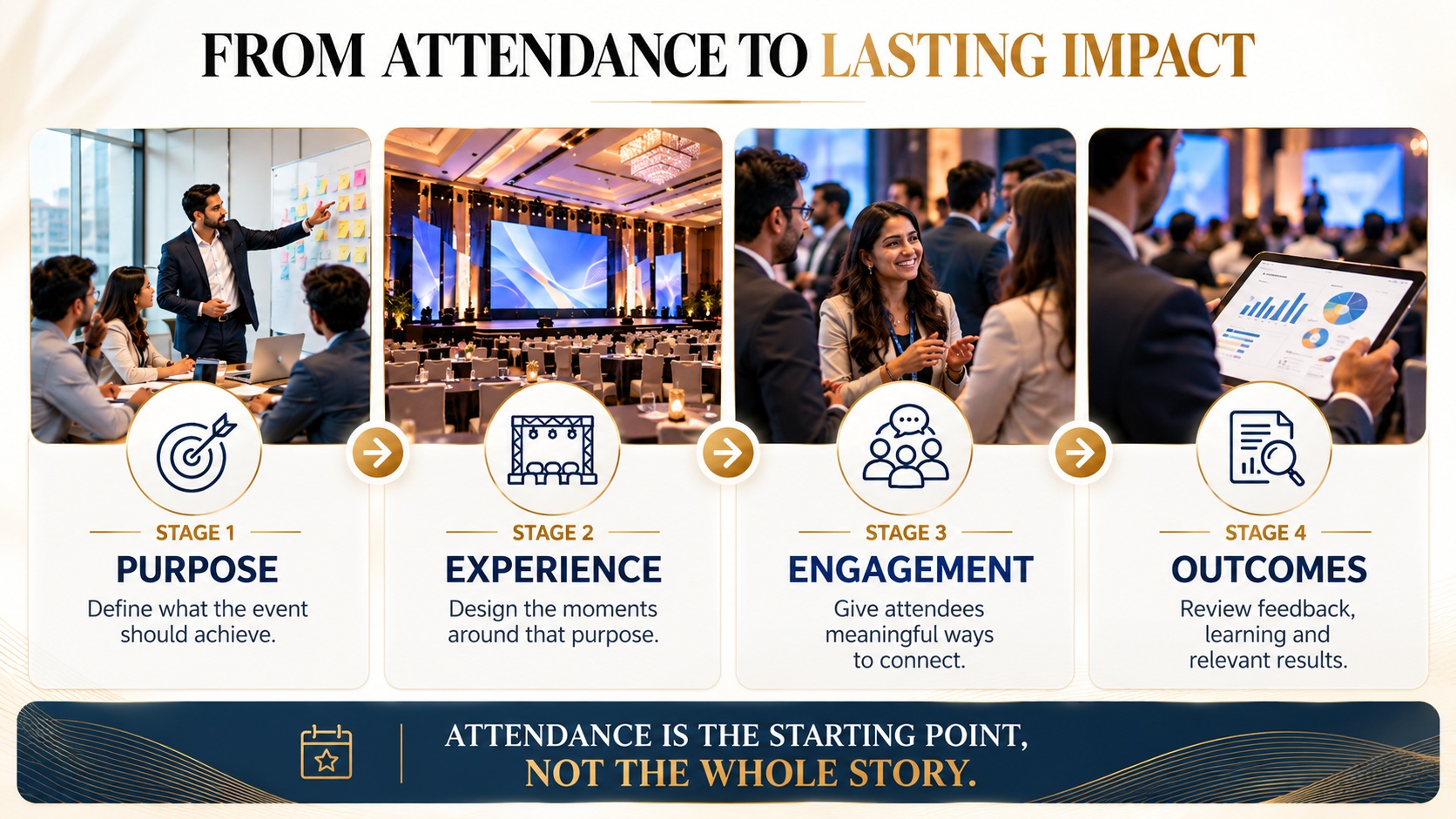
10. Measure What Matters After the Applause
A successful event review should go beyond asking whether people attended or whether the stage looked impressive.
Start with the original objective. What was the event intended to achieve? Which signals would help the organisation assess whether it moved towards that goal?
For an employee recognition event, useful feedback might include whether recipients felt appropriately recognised and whether the programme communicated the achievements clearly. For a conference, it might include participant feedback, understanding of key messages or follow-up engagement. For a product event, the review may consider product interest, questions received or subsequent conversations.
The right measures will vary. Not every outcome can be attributed to the event alone, and a positive atmosphere does not automatically prove a commercial result.
A practical review can combine attendee feedback, observations from the production team, programme performance and relevant follow-up measures. It can also identify which parts of the experience worked well and which should change next time.
Over time, these observations help organisations make more informed choices about programme design, event production and the attendee journey.
Memorable experiences are not created by guesswork alone. They can be improved by paying attention to what people respond to and learning from each event.
How JRS Creation Can Support the Event Experience
Creating a memorable corporate event requires more than assembling individual production elements. The design, stage environment, visual communication and practical execution need to work together in support of the event's purpose.
JRS Creation can be positioned around this connection between the intended experience and its physical delivery, particularly for corporate events, employee recognition programmes, conferences and exhibition environments, subject to the agreed project scope.
The starting point is understanding what the organisation wants attendees to experience. From there, design and production decisions can be evaluated against the venue, programme, audience requirements and practical constraints.
The objective is not simply to create a visually impressive setting. It is to create an environment that supports the event's message and gives its important moments the space they deserve.
If you are planning a corporate event, begin with the experience you want people to remember—and build the production approach around it.
The Final Takeaway
The corporate events people remember are not necessarily the biggest or most elaborate. They are the ones in which the purpose, programme, environment and human experience work together.
A clear story gives the event direction. Thoughtful design helps people navigate the experience. Meaningful recognition makes achievements matter. Participation creates opportunities to contribute. Technical preparation and coordination allow the important moments to unfold with fewer distractions.
None of these elements guarantees that an event will be remembered. But together, they create a stronger foundation for an experience that feels relevant, coherent and worth talking about.
The most useful question to ask when planning your next event is not simply, “What should we put on stage?”
It is this:
“When people leave, what do we want them to remember—and why?”
That is where a memorable corporate event begins.
Planning your next corporate event? Connect with JRS Creation to discuss your event objectives, production requirements and the experience you want to create.
Discuss Your Event: https://www.jrscreations.net/contact
FREQUENTLY ASKED QUESTIONS
What makes a corporate event memorable?
A corporate event can become memorable when its purpose, storytelling, environment and attendee experience work together. Meaningful recognition, clear communication, audience participation and well-coordinated production can all contribute to a stronger experience.
How can companies make corporate events more engaging?
Companies can design relevant audience interactions, purposeful networking, clear programme transitions and activities suited to the event's objective. Engagement should help attendees contribute or connect rather than simply add another activity to the agenda.
Does an expensive stage make an event more memorable?
Not necessarily. Stage design and production quality can support the experience, but their value depends on how well they serve the audience and event objective. An elaborate setup cannot replace relevant content, meaningful moments or effective programme planning.
How does event design influence the attendee experience?
Event design influences how people enter, navigate and understand a space. Stage visibility, lighting, signage, spatial layout and visual consistency can make an event easier to follow and help reinforce its intended identity.
How should companies measure the success of a corporate event?
Measurement should reflect the event's original purpose. Depending on the objective, companies may review attendee feedback, message understanding, participation, recognition feedback, follow-up engagement or other relevant outcomes. Attendance alone does not explain the full impact.