
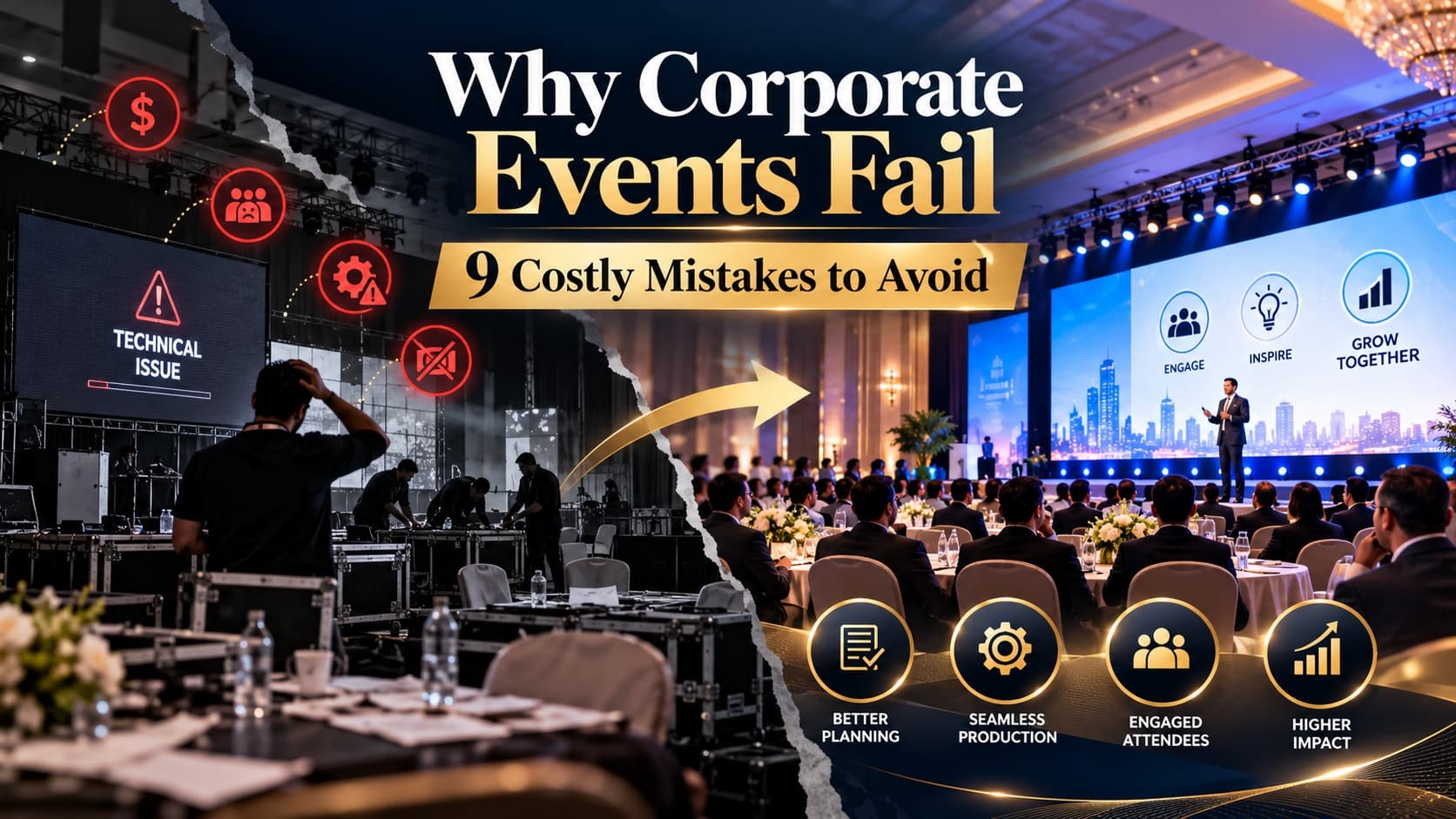
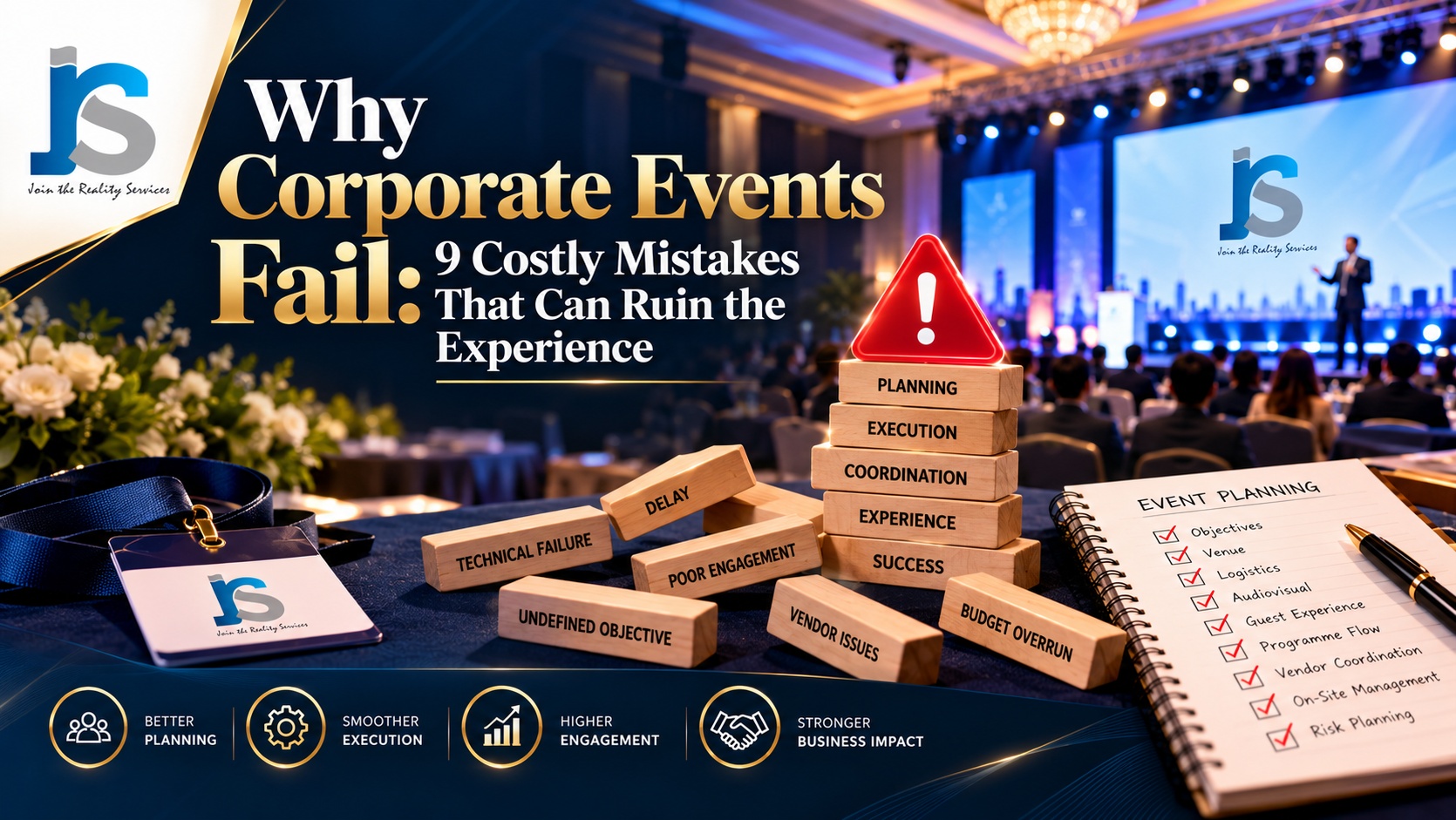
Why Corporate Events Fail: 9 Costly Mistakes That Can Ruin the Experience
A corporate event can have an impressive venue, an elaborate stage, a large LED wall and a carefully prepared guest list—and still fail to deliver the experience the business expected.
Why?
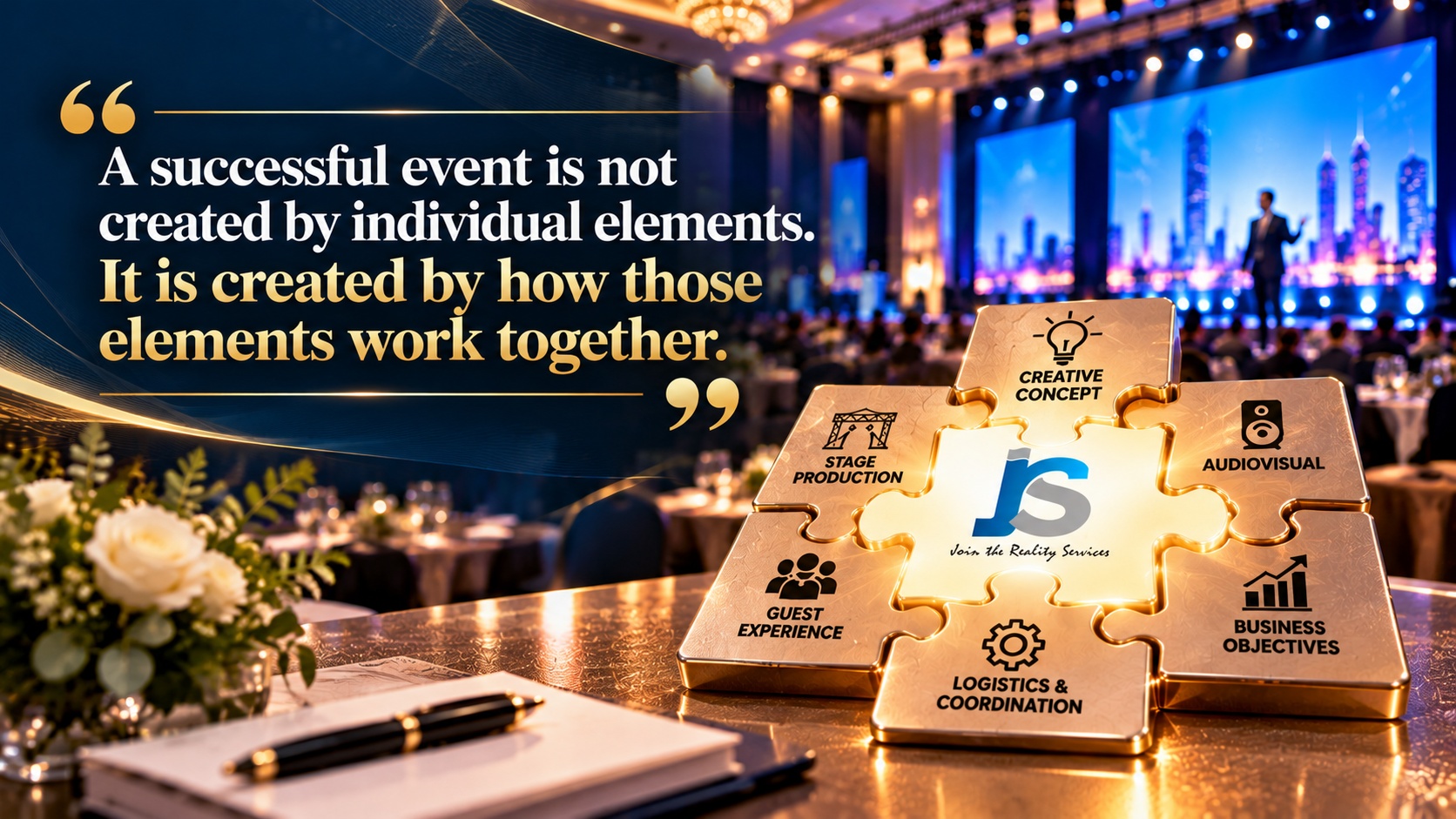
Because a successful event is not created by individual elements. It is created by how those elements work together.
A presentation that starts late, a sound system that fails during a keynote, a confusing registration process or a programme that leaves attendees disengaged can affect the entire experience.
For businesses investing time, money and resources in conferences, annual celebrations, dealer meets, product launches or Rewards and Recognition (R&R) events, the challenge is not simply to organise an event. It is to ensure that the event achieves its purpose.
So, what can go wrong, and more importantly, how can it be prevented?
Here are nine corporate event planning mistakes worth addressing before the first guest arrives.
1. Starting With the Stage Instead of the Objective
One of the most common planning mistakes is beginning with the visual concept before defining what the event needs to achieve.
A grand stage may look impressive, but what purpose should it serve? Is the event intended to recognise employees, introduce a product, communicate business strategy, strengthen dealer relationships or generate leads?
Each objective requires a different approach.
An awards ceremony needs meaningful recognition moments. A leadership conference needs clarity and effective communication. An exhibition needs to attract relevant visitors and encourage business conversations.
How to avoid it
Start with a clear event brief covering the primary business objective, target audience, key message, desired attendee experience, budget, venue and production requirements.
Once these elements are clear, the creative concept and production plan can be developed around them.
The takeaway: Design the event around its purpose, not just its appearance.
2. Underestimating the Budget
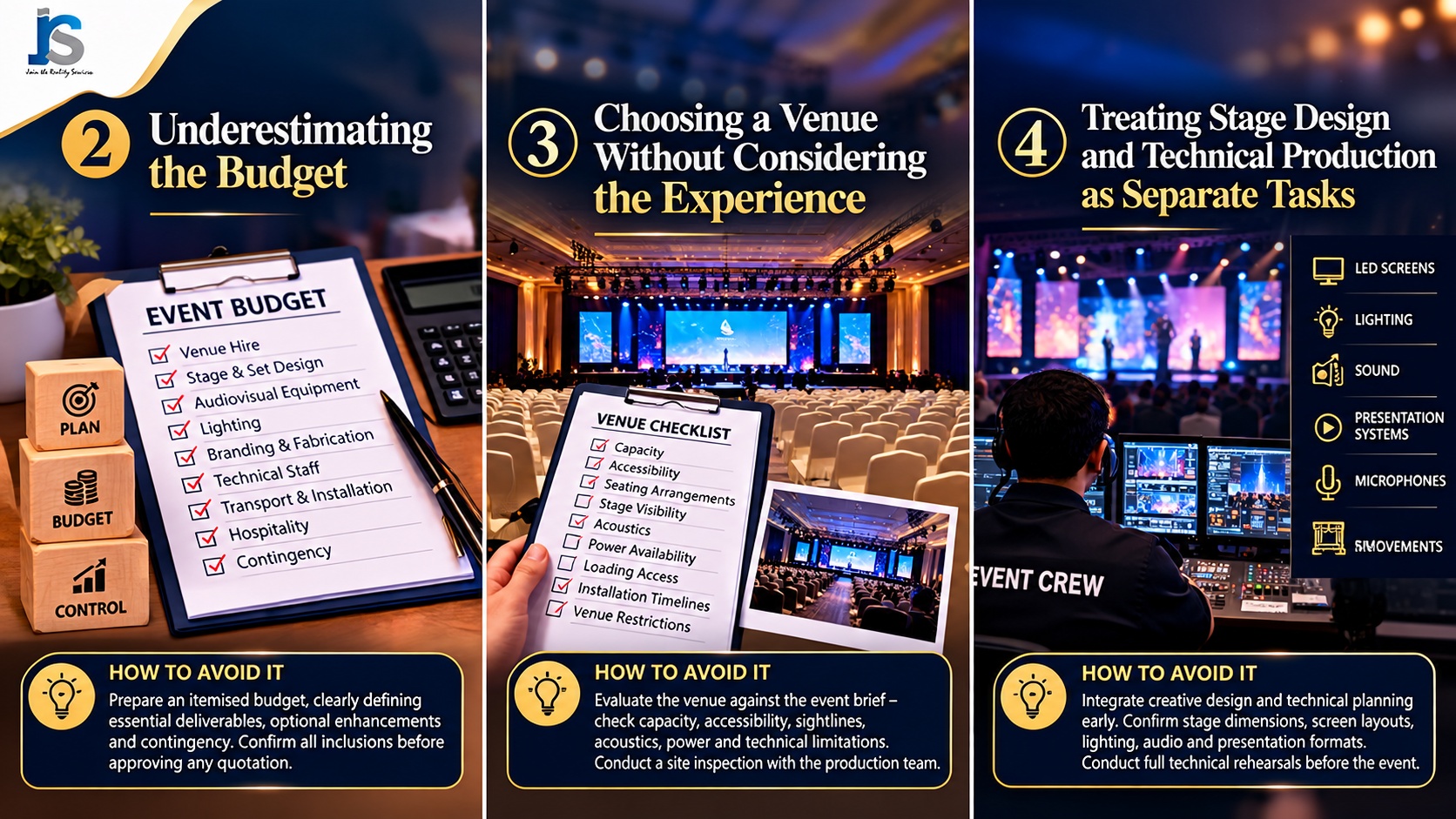
An event budget involves much more than venue hire and stage construction.
Audiovisual equipment, lighting, fabrication, branding, technical staff, transport, installation, hospitality and contingency expenses can all affect the final cost.
Problems arise when the initial estimate excludes essential requirements or when changes are introduced after production has begun.
An apparently affordable proposal can become expensive if its scope is unclear.
How to avoid it
Prepare an itemised budget that distinguishes between essential deliverables, optional enhancements and contingency provisions.
Before approving a quotation, clarify:
Which equipment and services are included.
Whether installation and dismantling are covered.
What staffing and on-site support are provided.
Whether transport, venue charges or additional hours cost extra.
How design changes and scope variations will be priced.
This makes it easier to compare proposals fairly and control spending throughout the project.
3. Choosing a Venue Without Considering the Experience
A venue may look attractive during a site visit but prove unsuitable for the actual event.
The stage may be too small for the planned production. Attendees may have poor sightlines. Registration may create congestion. Ceiling height, electrical access or venue restrictions may limit the intended setup.
These practical considerations can influence both the budget and the attendee experience.
How to avoid it
Evaluate the venue against the event brief rather than appearance alone.
Check capacity, accessibility, seating arrangements, stage visibility, acoustics, power availability, loading access, installation timelines and venue-specific technical restrictions.
Where possible, conduct a site inspection with the production team before finalising the design.
A venue should support the event concept, audience and operational requirements—not force last-minute compromises.
4. Treating Stage Design and Technical Production as Separate Tasks
The stage may be visually impressive in a design presentation, but the actual experience depends on how its components work together.
LED screens, lighting, sound, presentation systems, microphones and stage movements need to be coordinated.
For example, a beautifully designed screen is of limited value if presentation text is unreadable from the back of the room. Dramatic lighting cannot compensate for unclear audio. A product reveal can lose its impact if the visual cue plays late.
How to avoid it
Bring creative design and technical production planning together early.
Confirm stage dimensions, screen layouts, viewing distances, equipment requirements, presentation formats, lighting positions and audio coverage before installation.
Conduct technical rehearsals to test the complete setup rather than checking each component in isolation.
The goal is to make every technical element support the same experience.
5. Ignoring the Attendee Journey
Event organisers often focus on what happens on stage and overlook everything attendees experience before, during and after the programme.
Long registration queues, unclear signage, uncomfortable seating, crowded networking areas and poorly timed breaks can affect how people perceive an otherwise well-produced event.
The audience does not experience an event as a production checklist. It experiences the entire journey.
How to avoid it
Map the attendee journey from invitation and registration to arrival, participation and departure.
Ask practical questions:
Can guests find the venue and registration desk easily?
Is the entry process straightforward?
Can everyone see and hear the presentations?
Are refreshments and breaks planned appropriately?
Is there enough space for networking and movement?
Are accessibility and individual requirements considered?
Small improvements at these touchpoints can make the overall experience smoother and more welcoming.
6. Creating a Programme That Looks Good on Paper but Feels Long in Reality
An event agenda may be perfectly timed on paper but exhausting in practice.
Too many speeches, lengthy presentations, repetitive award announcements or insufficient breaks can reduce attention and participation.
This is particularly important for conferences, annual days and R&R events, where several programme elements must fit within a fixed schedule.
How to avoid it
Design the running order around the audience's attention and the event's objective.
Keep presentations focused, allow realistic time for transitions, coordinate speaker handovers and include suitable breaks.
For awards ceremonies, prepare recipient details and presentation cues in advance. For conferences, balance information-sharing with interaction and networking.
A good programme does not simply fill the available time. It gives every segment a reason to exist.
7. Depending on Vendors Without Clear Ownership
Corporate events often involve multiple teams and suppliers, including venue management, fabrication, lighting, sound, catering, branding and logistics.
Even capable vendors can create problems when responsibilities overlap or critical tasks have no clear owner.
One team may assume another is arranging equipment. A design approval may be delayed. A delivery may arrive after installation has begun.
These are coordination problems, not necessarily individual performance problems.
How to avoid it
Create a central production schedule with clearly assigned responsibilities, deadlines and approval points.
Identify who owns each deliverable, who approves changes and who makes decisions when issues arise.
Establish a communication channel for operational updates and maintain a shared version of the event schedule.
A designated event lead or production coordinator can help connect the moving parts and ensure that important details are not overlooked.
8. Having No Contingency Plan
Even well-planned events can encounter unexpected situations.
A presentation file may not open. A speaker may arrive late. A microphone may stop working. A schedule may change at short notice.
The mistake is not that something unexpected happens. It is having no practical response ready.
How to avoid it
Identify the most likely risks before the event and decide how each will be handled.
Depending on the event, preparations may include:
Backup copies of presentations and videos.
Spare microphones or essential technical equipment.
Alternative cues or programme sequences.
Clear escalation contacts.
Buffer time between important segments.
Appropriate safety and emergency procedures.
Rehearsals and pre-event checks help identify issues early. Contingency planning helps the team respond calmly if something still goes wrong.
9. Measuring Success Only by Attendance and Applause
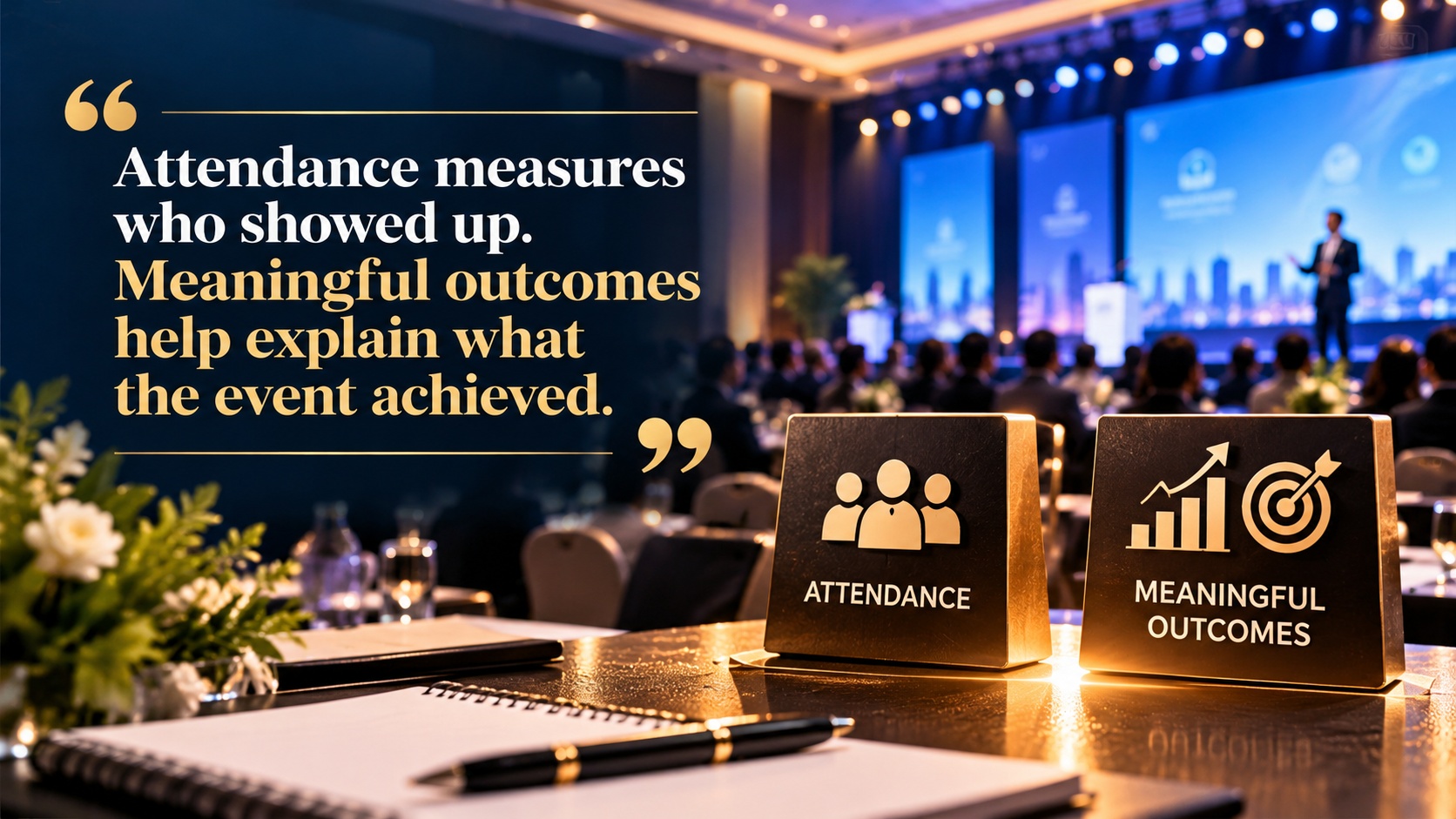
A full auditorium and enthusiastic applause can be encouraging, but they do not automatically prove that the event achieved its business objectives.
A conference may attract hundreds of attendees but generate little meaningful engagement. An exhibition may receive considerable footfall without producing relevant business conversations.
Similarly, an employee event may be well attended but fail to communicate the recognition or message intended by the organisation.
How to avoid it
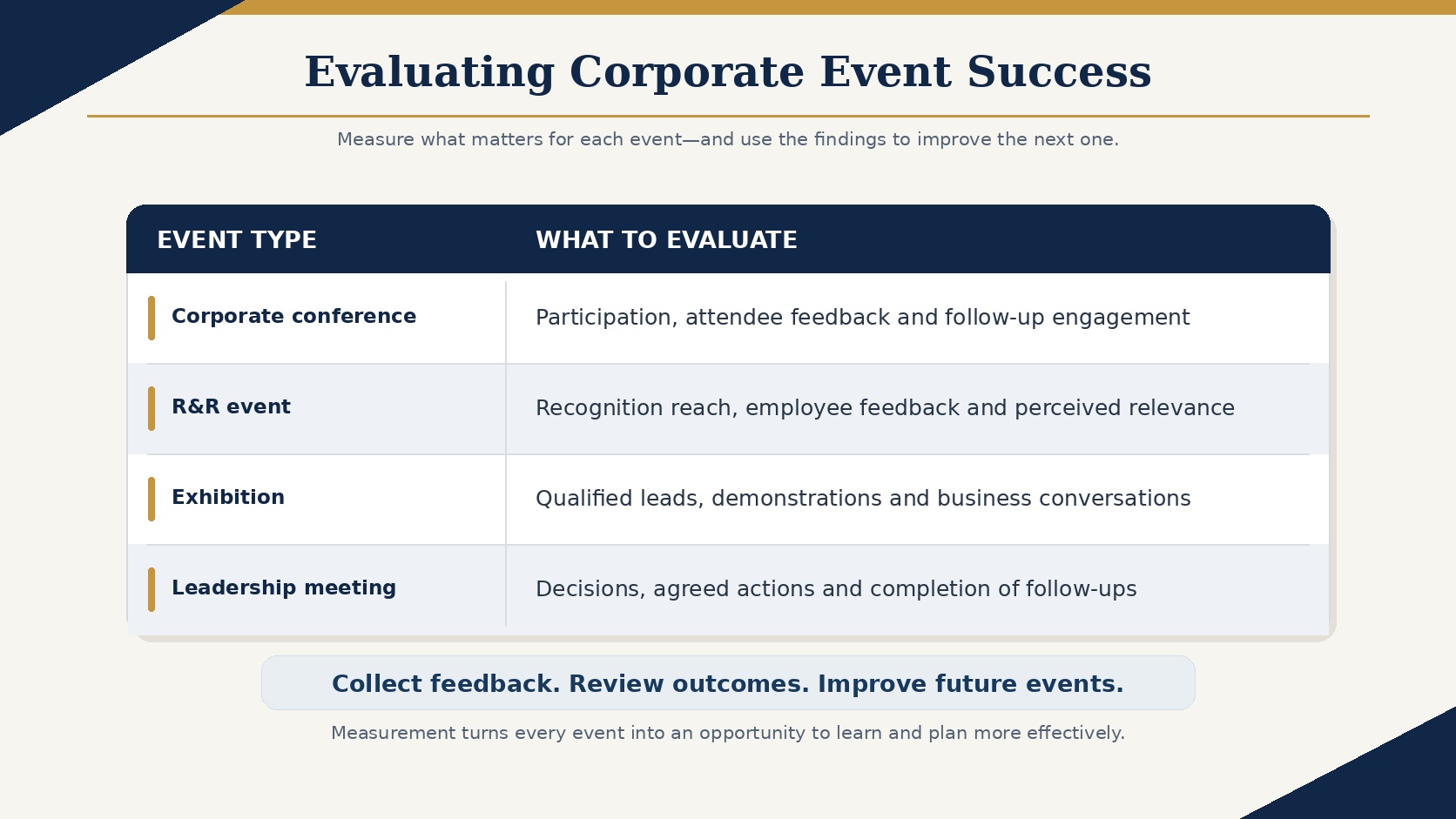
Define success measures before the event takes place.
The Pre-Event Checklist: What Should Be Confirmed Before Guests Arrive?
A structured final review can help teams identify gaps before the event begins.
Event strategy
Objectives, audience and key messages are confirmed.
Budget and scope of work are approved.
Programme and running order are finalised.
Venue and production
Stage, screens, lighting and sound have been checked.
Presentations and video files have been tested.
Branding, signage and seating are ready.
Installation and safety requirements have been reviewed.
People and coordination
Speakers, presenters and vendors know their responsibilities.
Registration and attendee movement have been planned.
Key contacts and escalation procedures are available.
Contingencies and measurement
Backup arrangements have been confirmed.
Final rehearsals and technical checks are complete.
Feedback and outcome-measurement plans are ready.
The exact checklist will vary by event type and scale, but the principle remains the same: confirm critical details before they become live-event problems.
What Makes a Corporate Event Truly Successful?
Successful events rarely depend on one dramatic element. They depend on a series of decisions that reinforce one another.
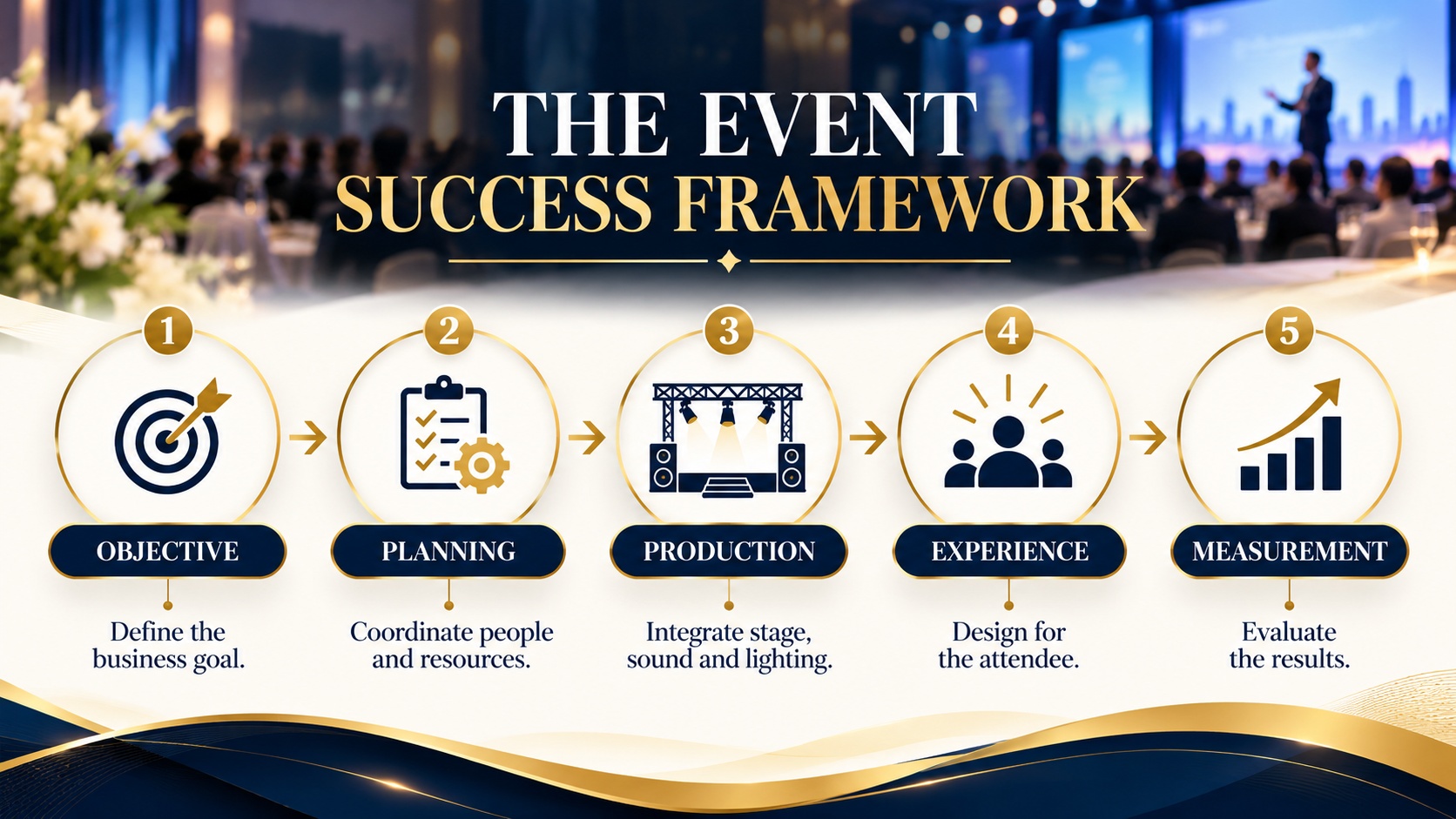
A clear objective guides the creative concept. The concept informs the stage and production requirements. Good coordination brings vendors and timelines together. Attendee-focused planning makes participation easier. Measurement reveals whether the event delivered the intended value.
When these elements are aligned, the event becomes more than a collection of activities.
It becomes a carefully planned business experience.
How JRS Creation Approaches Event Execution
At JRS Creation, event production, fabrication, audiovisual requirements and event setup are important elements in bringing corporate event concepts to life.
For conferences, awards ceremonies, dealer meets and exhibition environments, understanding the brief and coordinating the required production elements are essential to effective execution.
Every project has its own requirements. The right approach begins by understanding the audience, objectives, venue, scope and timeline before developing the production plan.
Whether you are planning a corporate conference, a recognition event or a branded exhibition environment, the production approach should be aligned with the intended experience.
Planning a Corporate Event?
Discuss your upcoming event with JRS Creation to explore production and setup requirements that fit your objectives, venue and budget.
Suggested CTA button: Discuss Your Event
Link the CTA to the verified JRS Creation enquiry or contact page.
Final Thoughts
A corporate event does not need to be the biggest, most expensive or most elaborate to be successful.
It needs to be purposeful, well coordinated and designed around the people attending it.
Avoiding these nine mistakes can help businesses reduce preventable issues, improve the attendee experience and make better use of their event investment.
Because ultimately, the measure of a successful event is not simply whether everything was arranged. It is whether everything worked together to achieve something meaningful.
Frequently Asked Questions
What are the most common corporate event planning mistakes?
Common mistakes include unclear objectives, underestimated budgets, unsuitable venues, poor technical coordination, weak attendee experience planning, unclear vendor responsibilities and inadequate contingency planning.
How can businesses avoid going over budget on corporate events?
Use an itemised budget, define deliverables clearly, confirm exclusions and establish an approval process for changes to the agreed scope.
Why are technical rehearsals important?
They help verify audiovisual equipment, presentation files, microphones, lighting cues and programme transitions before attendees arrive.
How can you improve the attendee experience at a corporate event?
Plan the full attendee journey, including registration, navigation, seating, accessibility, programme flow, breaks and opportunities for interaction.
How do you measure corporate event success?
Choose measures aligned with the objective, such as attendee feedback, qualified leads, participation, employee recognition or completion of agreed business actions.
What should businesses look for in an event management partner?
Review relevant experience, technical and creative capabilities, project coordination, transparent pricing, defined responsibilities and contingency planning.