
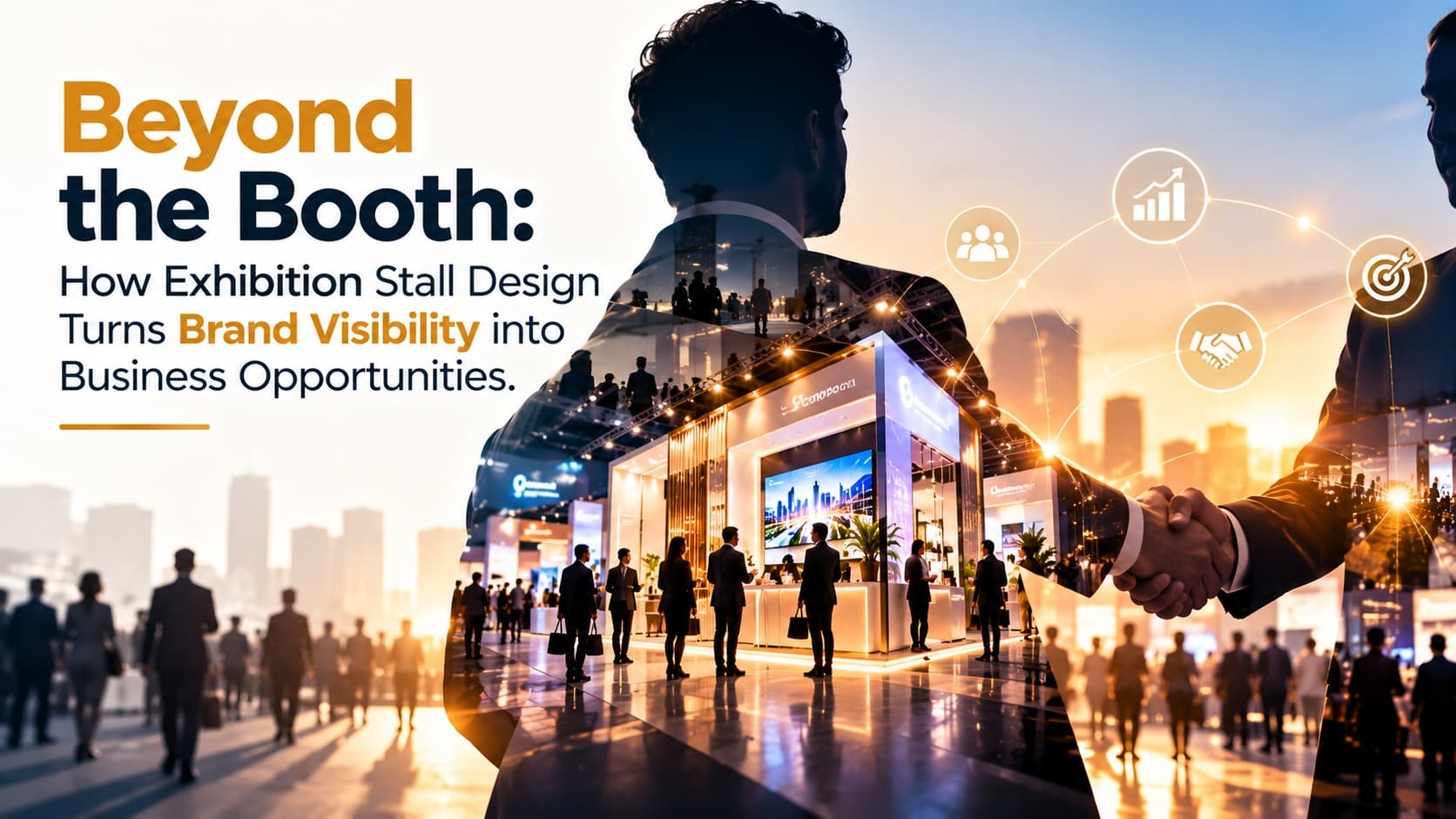
Beyond the Booth: How Exhibition Stall Design Turns Brand Visibility into Business Opportunities
At a busy exhibition, hundreds of brands compete for the same thing: attention.
Visitors walk past rows of stalls, scan product displays, exchange business cards and decide within moments where to stop. Some booths attract curious glances but little interaction. Others invite people to explore, ask questions and begin meaningful business conversations.
What creates that difference?
It is rarely just the size of the stall or the amount spent on decoration. The difference often lies in how effectively the space communicates the brand, welcomes visitors and supports the purpose of participating in the exhibition.
Exhibition stall design is not simply about building a structure. It is about creating a physical brand experience.
From the first visual impression to the final conversation, every element can influence how visitors engage with a business. Understanding these elements can help brands make better decisions before investing in their next exhibition.
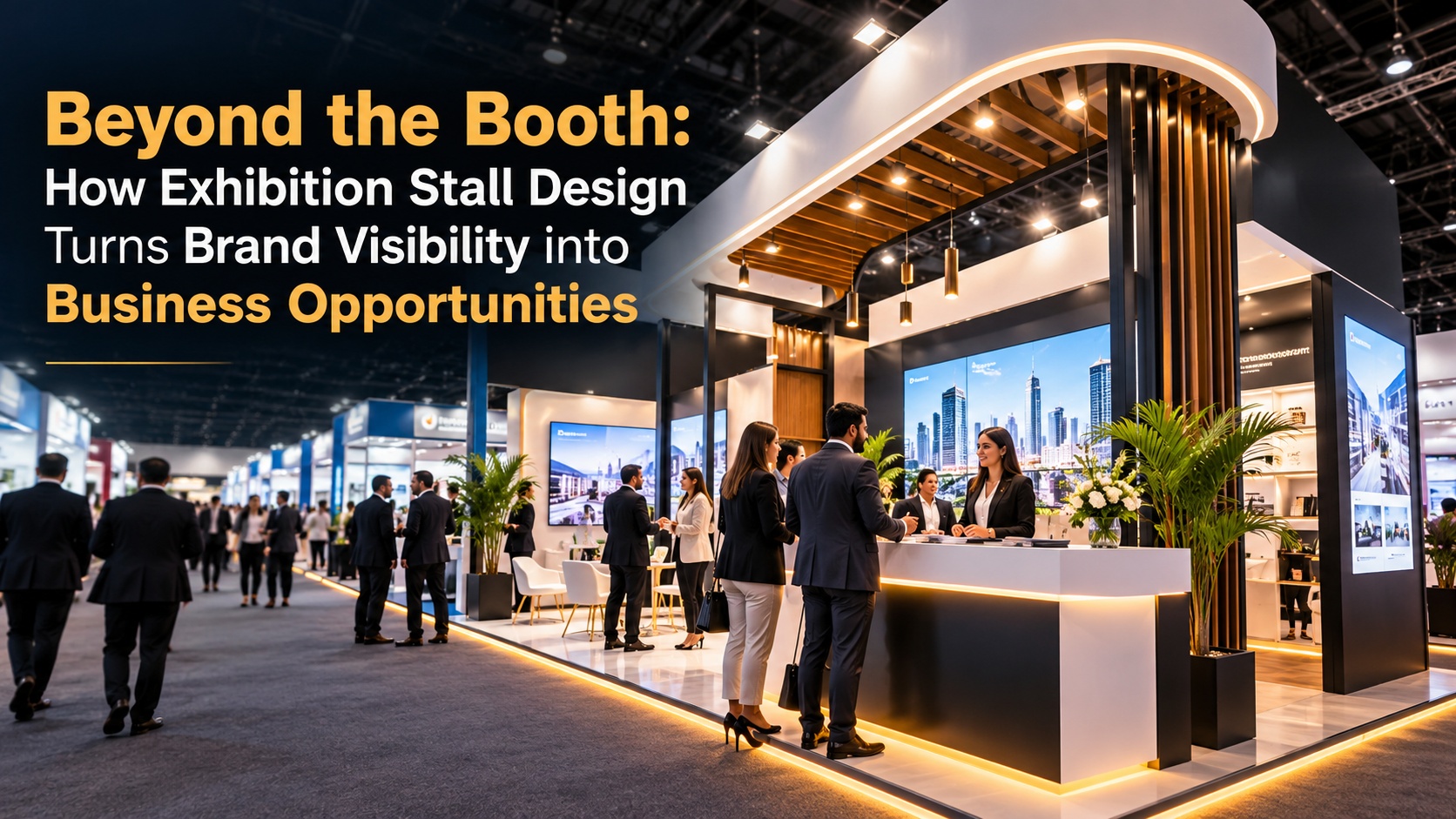
What Makes Exhibition Stall Design More Than Just Visual Appeal?
An exhibition stall is often one of the first physical interactions a potential customer has with a brand at a trade show.
It communicates what the business does, how it positions itself and whether its products or services deserve a closer look.
A well-designed stall brings together several interconnected elements: brand identity, spatial planning, fabrication, lighting, product presentation and visitor interaction.
Each element has a different purpose.
Branding makes the business recognisable. Layout determines how visitors move through the space. Lighting highlights important displays. Fabrication turns the design into a physical environment. Product presentation helps visitors understand what is being offered.
When these elements work together, the stall becomes more than a backdrop for marketing materials. It becomes an environment designed to support business conversations.
The objective is not to attract everyone indiscriminately. It is to make the right visitors notice the brand, understand its relevance and feel encouraged to engage.
1. Design for the First Impression, but Plan for the Next Interaction
An impressive exhibition booth can attract attention, but attention alone is not the end goal.
Visitors need to understand the brand quickly. If the message is unclear, the layout is confusing or the displays are difficult to approach, initial interest may not develop into a conversation.
Effective exhibition design therefore needs two layers.
The first is visual impact: a recognisable identity, a clear focal point and a coherent design.
The second is usability: accessible entry points, readable messaging, visible products and space for meaningful interactions.
Consider two stalls with similar budgets. One focuses on decorative structures and elaborate lighting. The other uses a clear brand message, a well-positioned demonstration area and a welcoming layout.
The second may create a more useful visitor experience because its design supports the purpose of the exhibition rather than relying on appearance alone.
What should brands prioritise?
A clear brand message that visitors can understand quickly.
A strong visual focal point.
Readable signage and appropriate display placement.
An inviting entrance and logical visitor movement.
Space for product demonstrations and business discussions.
The most effective design is not necessarily the most elaborate. It is the one that communicates the right message to the right audience.
2. Let the Layout Tell the Brand Story
Before selecting materials or deciding where to place a screen, consider how visitors will experience the stall.
Where will they first notice the brand? What will they see as they approach? Where can they interact with a product? Is there enough space for a meaningful conversation without obstructing other visitors?
These questions should influence the layout from the beginning.
A product-led business may need demonstration counters and display units. A B2B technology company may prioritise consultation areas and interactive screens. A premium consumer brand may require carefully controlled lighting, product showcases and a more spacious presentation.
The layout should reflect the nature of the business and the behaviour it wants to encourage.
Practical layout considerations
Visibility: Ensure the brand identity and key message can be seen from relevant visitor approaches.
Movement: Keep circulation routes clear and avoid creating bottlenecks around popular displays.
Interaction: Provide suitable areas for demonstrations, enquiries and business meetings.
Accessibility: Consider entrances, movement space and access requirements from the design stage.
Storage and operations: Allow for concealed storage, equipment access and practical staff requirements where needed.
A stall may look excellent in a design rendering, but its success depends on how well that design works in the actual exhibition environment.
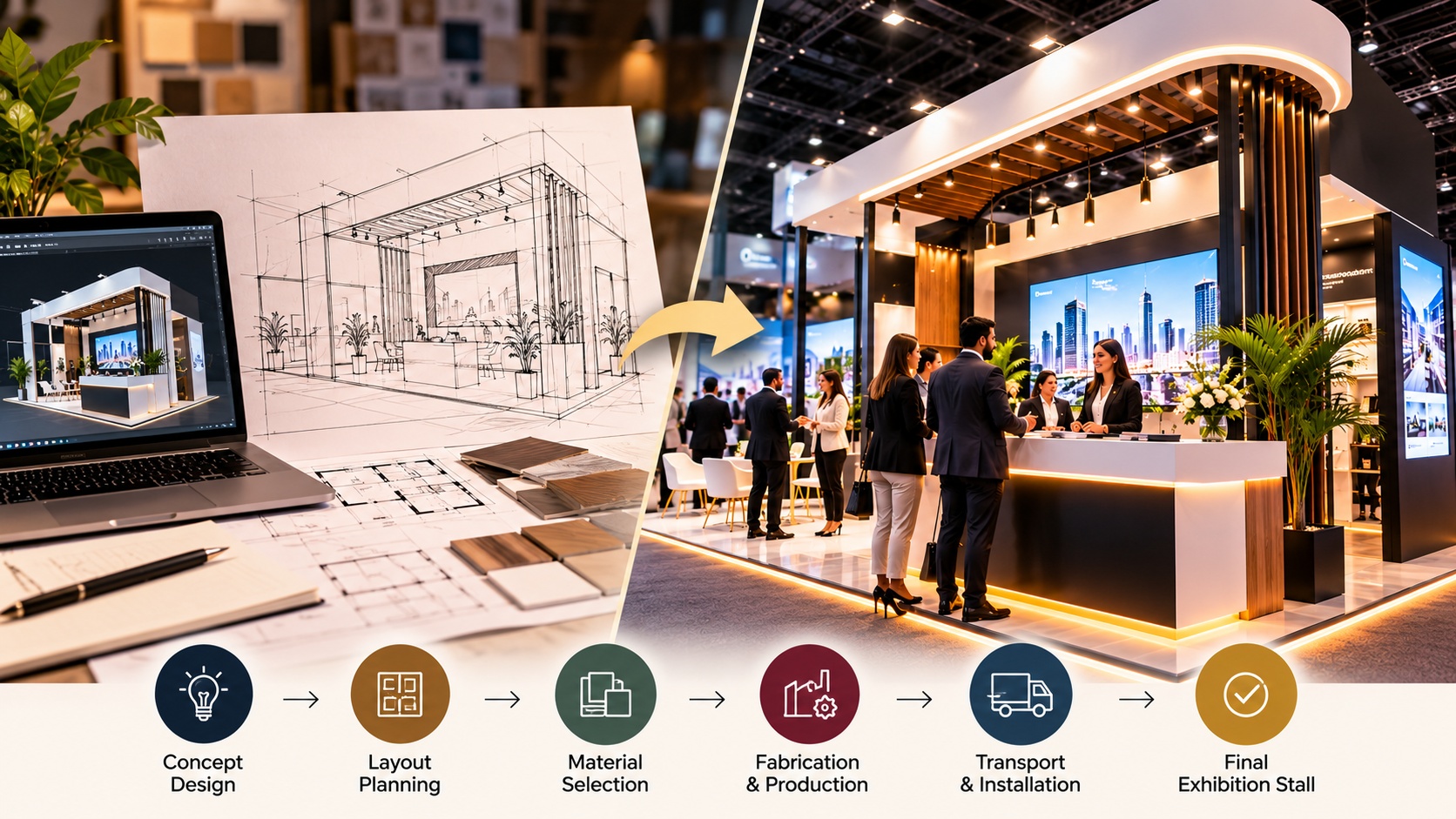
3. Exhibition Stall Fabrication: Turning a Concept into Reality
A design concept becomes valuable only when it can be translated into a safe, practical and well-finished physical structure.
Exhibition stall fabrication involves creating and assembling the components that bring the design to life. Depending on the project, this can include structural frameworks, counters, display units, partitions, signage, backdrops and custom architectural elements.
The fabrication process must consider the approved design, venue restrictions, material selection, installation time, transport and dismantling requirements.
A visually ambitious concept may need to be adjusted if it exceeds the venue's height limits, obstructs access or cannot be installed within the available schedule.
What to confirm before fabrication
Final dimensions and approved layout.
Venue regulations and permitted construction methods.
Material finishes, colours and branding specifications.
Lighting, electrical and display integration.
Delivery, installation and dismantling schedules.
Relevant structural and fire-safety requirements.
Close coordination between design, fabrication and on-site installation helps reduce last-minute changes and ensures that the finished stall reflects the approved concept as closely as practical.
Why execution quality matters
Visitors may not notice every construction detail consciously, but inconsistent finishes, loose components, exposed cables or poorly aligned graphics can affect the overall impression of the brand.
Good fabrication balances visual quality with practical considerations, durability where needed, installation efficiency and appropriate safety measures.
4. Lighting and Displays: Make the Important Things Visible
Lighting does more than make an exhibition stall look attractive. It influences visibility, directs attention and helps visitors distinguish between key displays and supporting elements.
Poor lighting can make products difficult to examine, reduce the readability of graphics or create uncomfortable glare. Excessive visual effects can distract from the brand message.
The objective is to use lighting deliberately.
Accent lighting can highlight a product or architectural feature. General illumination supports comfortable movement. Display lighting can improve product visibility. Integrated LED screens can communicate information, show demonstrations or reinforce brand messaging.
How to use displays effectively
Digital displays are most useful when they serve a clear purpose.
A product demonstration, concise explainer video or relevant visual presentation can help visitors understand an offering. Repetitive animations or excessive on-screen content may create activity without communicating much value.
Consider viewing distance, screen brightness, content dimensions, playback reliability and the surrounding lighting before finalising the display setup.
The visual experience should guide attention towards the brand's most important message, not overwhelm visitors with competing elements.
5. Build Visitor Engagement into the Design
An exhibition stall should make it easy for visitors to move from curiosity to interaction.
That does not mean every booth needs a touchscreen, a game or a complicated interactive installation. Engagement can be as simple as a useful product demonstration, a clear consultation area or a well-trained representative ready to answer questions.
The right approach depends on what the brand wants visitors to understand or do.
For example, a manufacturer might benefit from a product demonstration. A software company may need a guided walkthrough. A business selling complex B2B solutions might prioritise private discussions with qualified prospects.
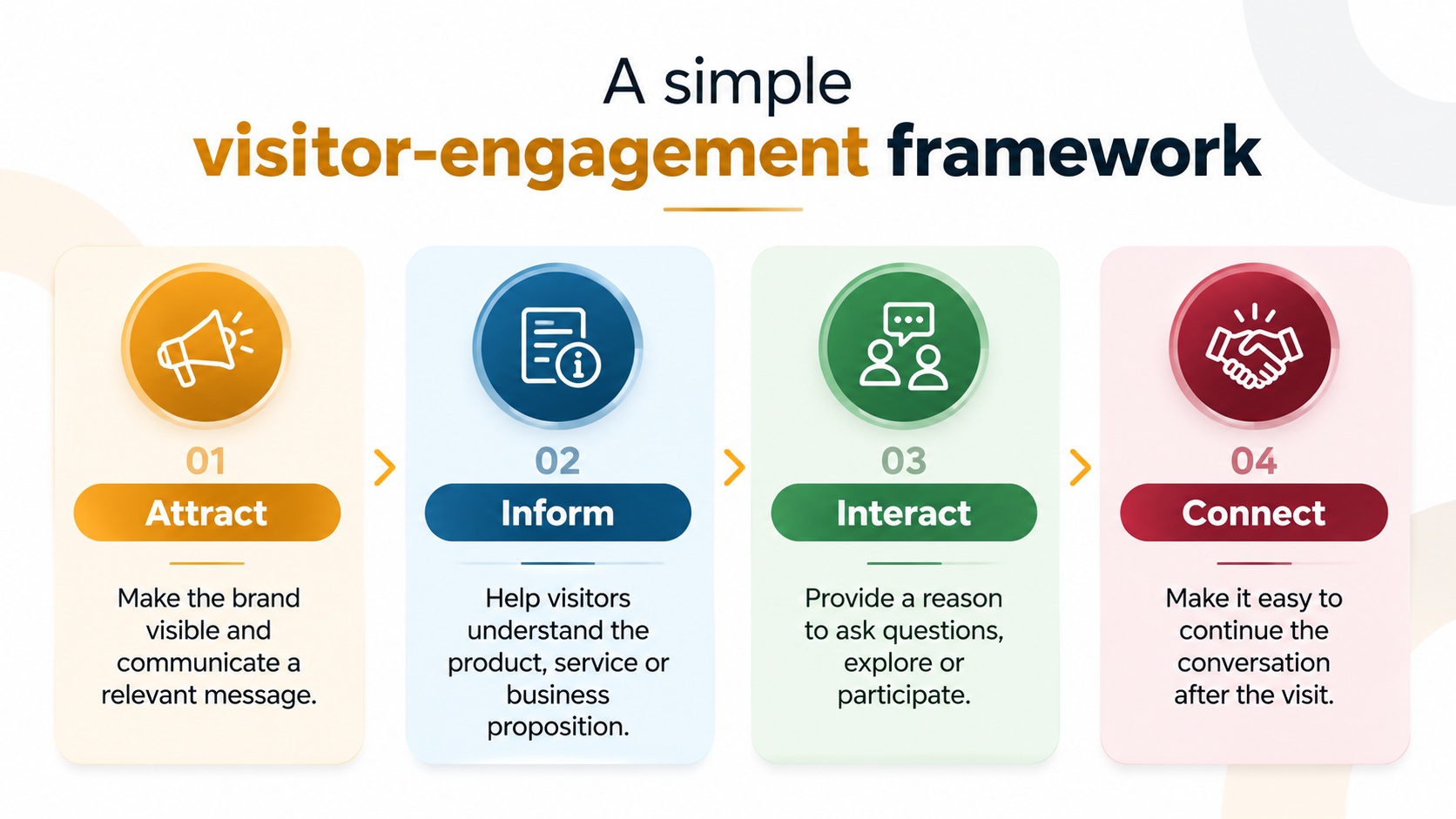
These stages help connect the physical design to the business purpose of attending the exhibition.
6. Branding Consistency: Make the Stall Recognisably Yours
An exhibition environment should feel like an extension of the brand, not a disconnected creative concept.
Colours, typography, imagery, messaging and material finishes should work together to reinforce the company's identity.
Using too many competing colours, inconsistent fonts or several unrelated messages can make a stall visually confusing.
The same applies to digital displays, brochures, product labels, staff clothing and other visitor touchpoints.
How to maintain consistency
Start with the brand guidelines and identify the essential visual elements that must remain recognisable.
Then adapt those elements to the physical environment. A large stall may provide opportunities for architectural branding, while a smaller booth may require more focused messaging and carefully positioned graphics.
Avoid treating every surface as an opportunity to add more information. A clear hierarchy usually communicates more effectively than an overloaded design.
The goal is for visitors to understand who the brand is, what it offers and why it is relevant.
7. Budgeting for the Complete Exhibition Experience
Exhibition stall costs vary according to dimensions, design complexity, materials, fabrication, lighting, digital displays, transport, installation, venue requirements and dismantling.
A low initial quotation may not represent the complete cost if essential components are excluded.
Likewise, a high-budget stall does not automatically create a better business outcome.
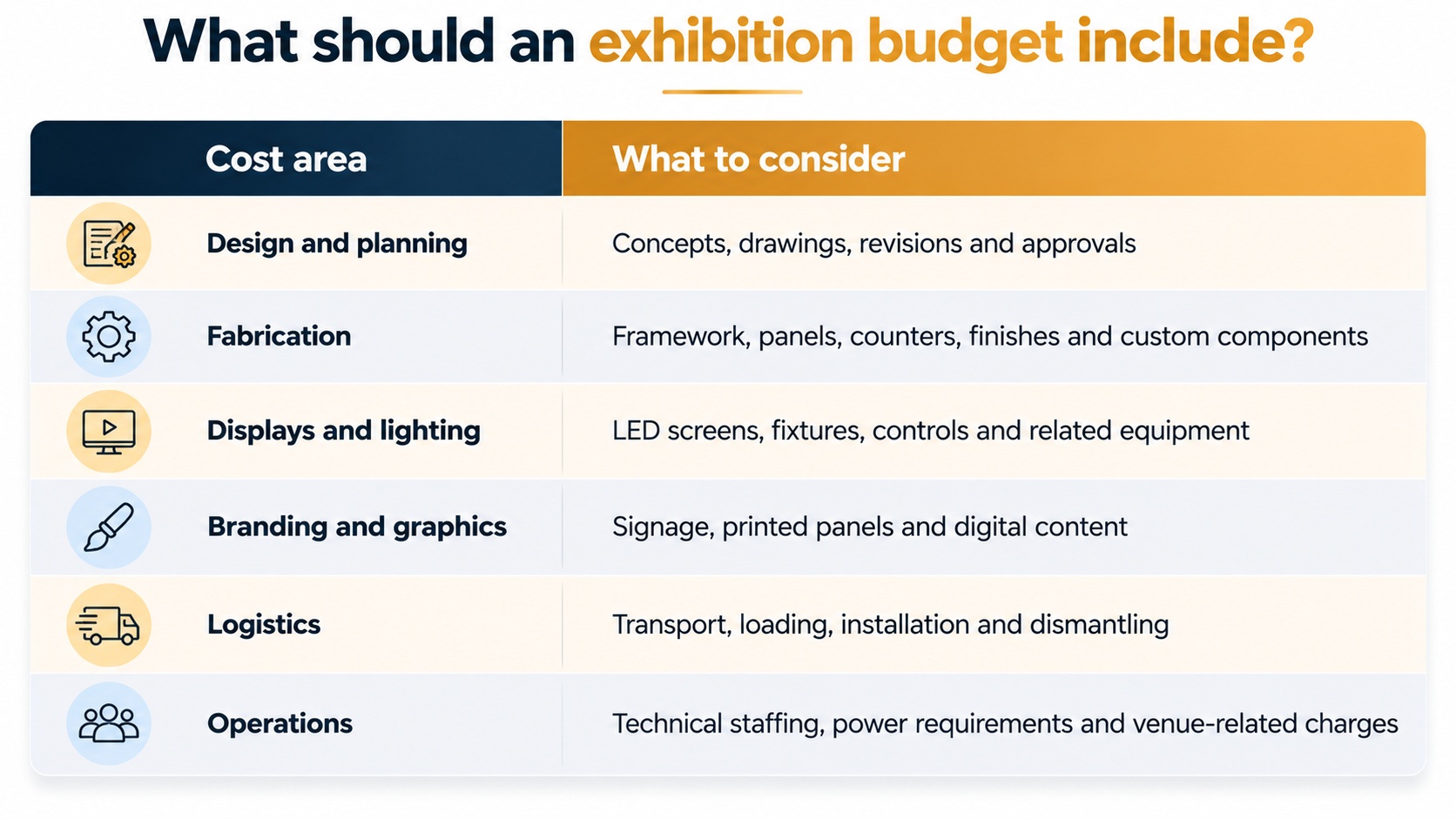
Request an itemised quotation and confirm inclusions, exclusions, revision limits and change-order procedures.
A transparent budget helps the business prioritise the elements that matter most and reduces the likelihood of unexpected expenses.
8. Plan for Installation, Safety and On-Site Execution
Even a well-designed stall can face difficulties if installation is poorly coordinated.
Late deliveries, incomplete graphics, untested displays or insufficient time for final checks can compromise the finished environment.
The installation plan should account for venue access, delivery windows, construction restrictions, technical requirements and the time needed to inspect the completed stall.
Before the exhibition opens
Confirm the approved design and dimensions.
Verify delivery and installation schedules.
Check all graphics, product displays and finishes.
Test lighting, screens and playback systems.
Inspect access routes, cables and relevant safety requirements.
Confirm who will resolve issues during the event.
A final walkthrough helps identify defects while there is still time to address them.
Planning for dismantling is also important. Materials, equipment and reusable components should be handled according to the project requirements and venue rules.
9. Measure More Than Footfall
A visually impressive stall may attract visitors without generating meaningful business opportunities. Conversely, a focused booth may produce valuable conversations even if overall footfall is modest.
That is why brands should define their objectives before the exhibition begins.
Depending on the business and event, useful measures may include qualified enquiries, product demonstrations, relevant business conversations, meetings booked, customer feedback and follow-up opportunities.
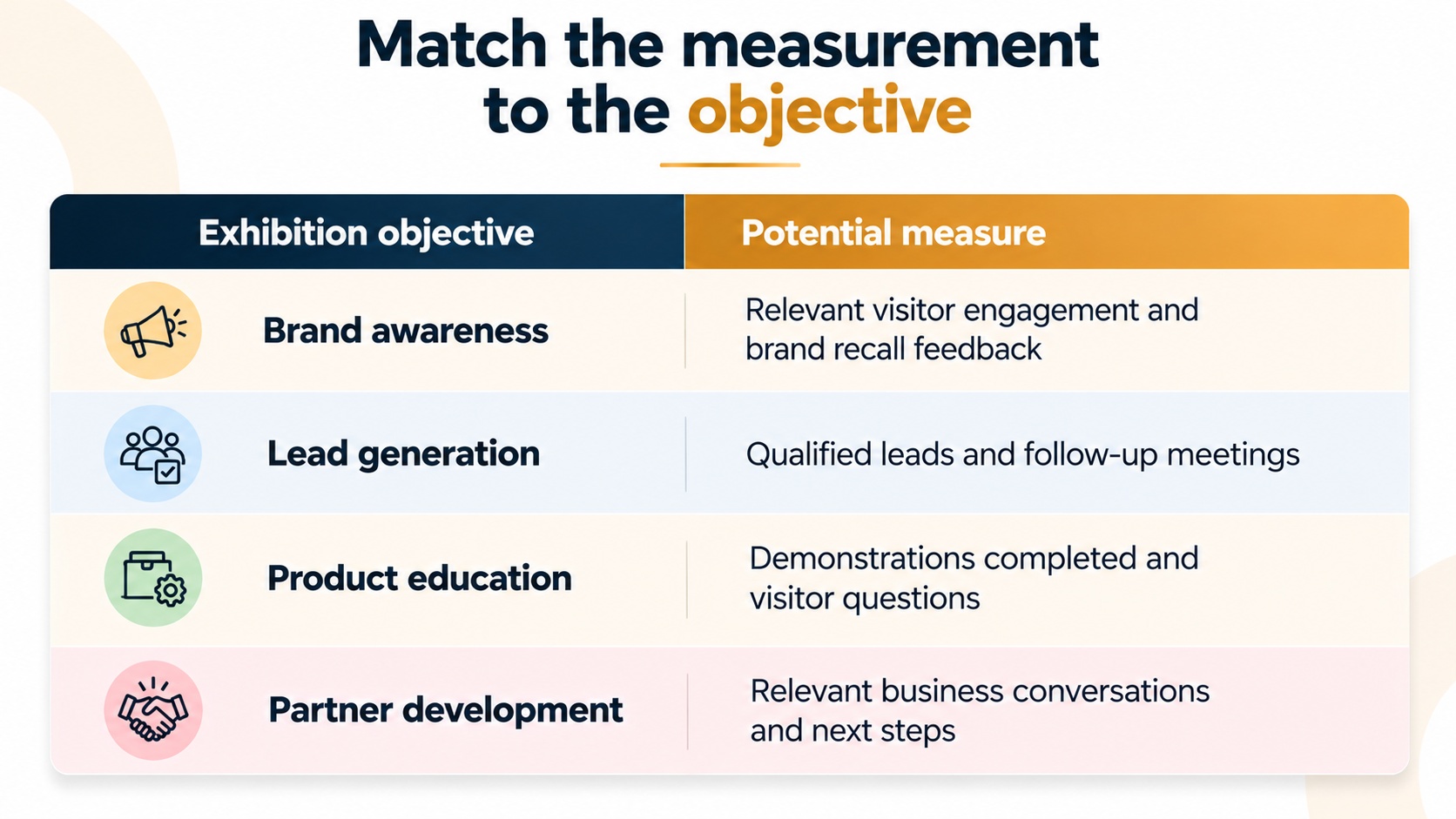
These measures provide a more useful picture than counting every visitor equally.
The stall design, staff briefing and follow-up process should all support the same objective.
What Should You Look for in an Exhibition Stall Design and Fabrication Partner?
Selecting a partner requires more than comparing design renderings or checking the lowest quotation.
Look for a team that can understand the brief, translate it into a practical design and coordinate the agreed fabrication and installation requirements.
Before making a decision, consider:
Relevant exhibition and fabrication experience.
Quality of completed work and suitable project references.
Understanding of the venue's technical and construction requirements.
Clarity of the proposed design, materials and deliverables.
Installation timelines and on-site coordination.
Transparency around pricing, exclusions and revisions.
Appropriate safety planning and contingency arrangements.
It is also important to confirm the scope of services. Some providers focus on design, while others undertake fabrication, installation and related production work.
Choose a partner whose verified capabilities match the project's requirements.
How JRS Creation Can Support Exhibition Projects
An effective exhibition environment brings together creative planning, fabrication, branding and practical execution.
JRS Creation works across event production and fabrication-related requirements, helping businesses develop physical environments for corporate events and brand experiences.
For exhibition projects, the starting point is to understand the business objective, allocated space, venue restrictions, brand guidelines, budget and installation timeline.
These details help establish the requirements for the design and production process.
Whether a business is preparing for a trade show, a product showcase or a branded exhibition environment, a clear brief and coordinated execution are essential to delivering a setup aligned with its objectives.
Planning Your Next Exhibition?
Discuss your exhibition requirements with JRS Creation to explore a suitable approach to stall design, fabrication and event setup.
Discuss Your Exhibition: https://www.jrscreations.net/contact
Final Thoughts: Design for the Conversation, Not Just the Photograph
An exhibition stall may be photographed hundreds of times, but its value extends beyond how it looks in a picture.
The real opportunity lies in creating a space that communicates clearly, welcomes the right audience and supports meaningful interactions.
When design, fabrication, lighting, branding and visitor flow work together, the stall becomes a more purposeful part of the exhibition strategy.
The best starting point is not asking how impressive the booth can look. It is asking what the brand wants visitors to understand, experience and do.
That is the difference between simply occupying exhibition space and using it with intention.
Frequently Asked Questions About Exhibition Stall Design
What is exhibition stall design?
Exhibition stall design involves planning the layout, visual identity, display areas, branding and visitor experience of a booth at a trade show or exhibition.
What is the difference between exhibition stall design and fabrication?
Design determines the concept, layout and appearance. Fabrication involves constructing the physical components, such as frameworks, panels, counters, displays and custom structures. Both need to work together for effective execution.
How much does exhibition stall design and fabrication cost?
Costs depend on stall dimensions, materials, design complexity, lighting, digital displays, transport, installation, venue requirements and dismantling. An itemised quotation is the best way to compare proposals.
How can an exhibition stall attract more visitors?
Clear branding, a relevant message, strong visual hierarchy, accessible layouts and useful product demonstrations can encourage relevant visitors to stop and engage. Results depend on the audience, location and overall exhibition strategy.
How far in advance should an exhibition stall be planned?
The required lead time depends on the exhibition date, design complexity, approvals, venue rules, fabrication requirements and installation schedule. Larger or more customised stalls generally require more coordination.
What should be included in an exhibition stall design brief?
Include the exhibition name and dates, allocated dimensions, brand guidelines, target audience, objectives, product requirements, budget, venue restrictions, technical needs and installation deadlines.
How do you measure the success of an exhibition stall?
Measure results against the original objective. Relevant indicators may include qualified leads, product demonstrations, business meetings, visitor feedback and follow-up opportunities.